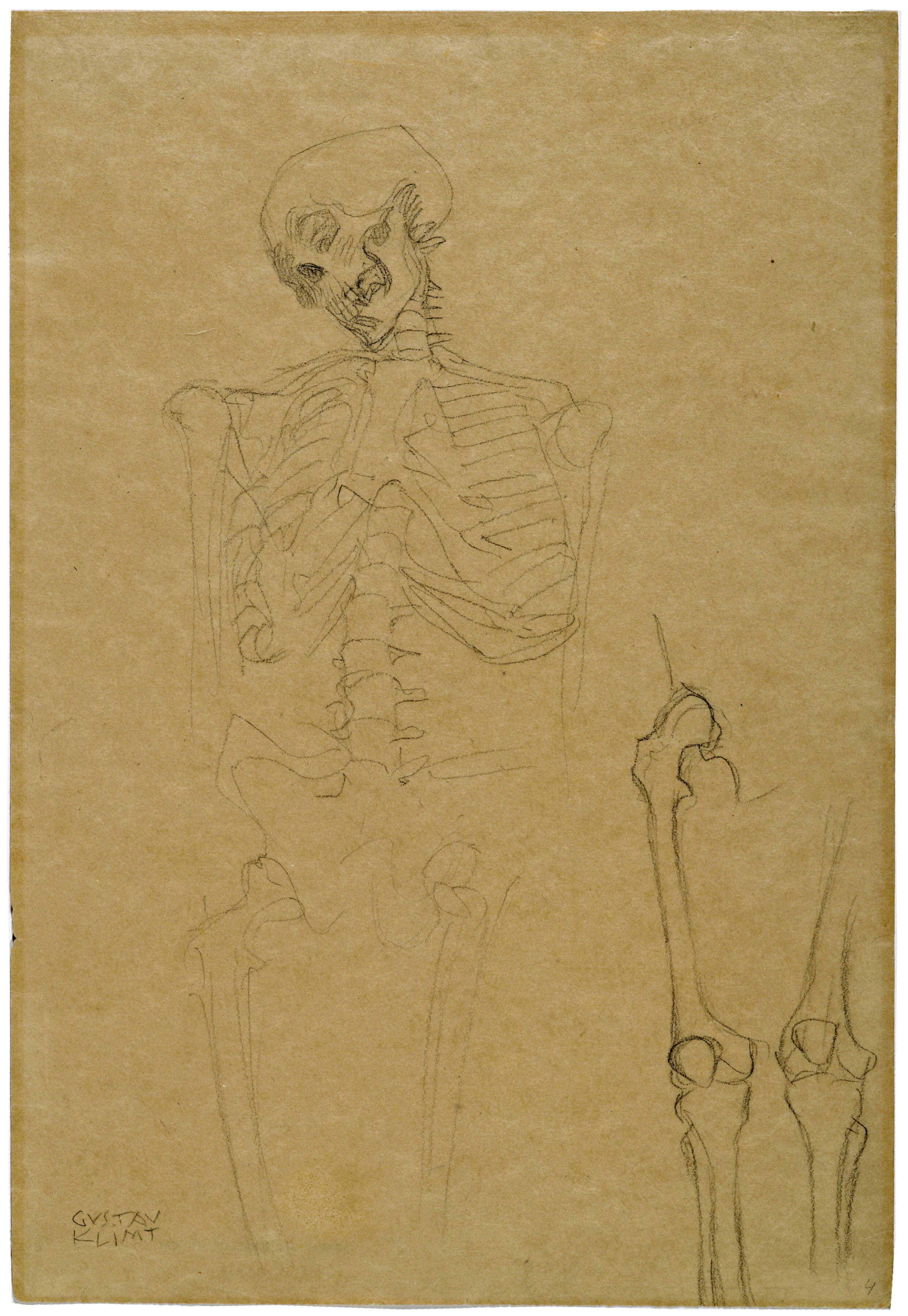
Skelett, Detailstudie der Ober- und Unterschenkel
Gustav Klimt
um 1900
ehemalige:r Besitzer:in Kramer-McGeehan Sammlung (New York)ehemalige:r Besitzer:in Daniel F. Collier Jr. (New York)Auktion1.11.1978 Christie´s New York Auktion5.11.1981 Christie´s New York Auktion9.10.1986 Christie´s New York ehemalige:r Besitzer:in Besitzer:in unbekannt Auktion7.5.2013 Bonhams [27475]Besitzer:in Besitzer:in unbekannt
Werkverzeichnis
Delicately rendered with scientific exactitude, the skeletal study by Gustav Klimt is one but a few drawing studies that remain from his creation of the Faculty Paintings for the ceiling of the University of Vienna's Great Hall between the years of 1900-1907. Initially commissioned in 1894, Klimt rendered three personifications of ideologies: Philosophy, Medicine and Jurisprudence, but when presenting them to the University, the works were deemed pornographic and imbued with perverted excess. The drawing and subsequent oil paining stand as a poignant discussion of censorship within art during the early 20th Century.
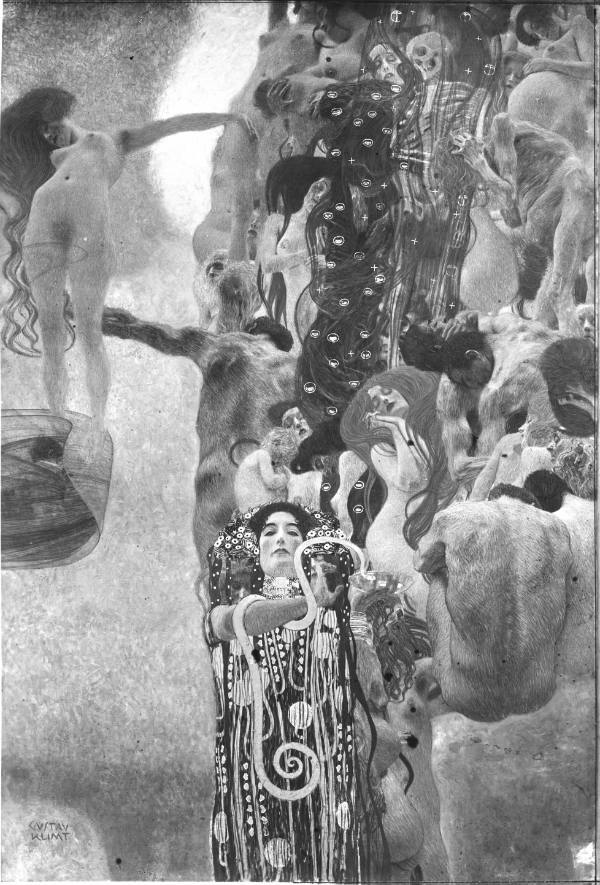
In looking to the finished work Medicine, Klimt combines a youthful nude with a newborn babe and a skeleton wafting in the upper right quadrant. This juxtaposition of new life and that of death in the skeletal composition was too blunt of a portrayal of the complexities of the history of medicine – where the main physicians of the University felt that Klimt had ignored past achievements of their scientific community, and rather choose to glorify the shocking and macabre within the work.
When the University refused to show the works, Klimt and one of his main patrons, August Lederer, fought for the return of the paintings. With the works returned, each piece found different homes throughout Austria and Germany, however with the outbreak of World War II, Medicine was seized by the German state and again deemed degenerate by the Nazis. In May of 1945, the painting was destroyed by German SS forces, and all that remain now are preparatory sketches, like the elegant and chilling drawing seen here. Representing much more than just an figural study, the drawing by Gustav Klimt remains as a lasting example of the fight against artistic censorship and the lengths people go to silence beauty and expression.
Informationen zu diesem Werk können sich aufgrund laufender Forschungsarbeiten ändern.
Information about this work may change as the result of ongoing research.